

ISSN 0439-755X
CN 11-1911/B
CN 11-1911/B
Acta Psychologica Sinica ›› 2026, Vol. 58 ›› Issue (9): 1873-1887.doi: 10.3724/SP.J.1041.2026.1873
• Column on the Stress, Resilience, and Health • Previous Articles Next Articles
XIONG Sicheng, LUO Yanhong, XIONG Ge, CHEN Yun, ZHANG Bin( )
)
Published:2026-09-25
Online:2026-07-29
Contact:
Zhang Bin, E-mail: zb303@163.com
XIONG Sicheng, LUO Yanhong, XIONG Ge, CHEN Yun, ZHANG Bin. (2026). The dynamic relationship between social media use and interpersonal adaptation among freshmen in their first month of college: A moderated intensive longitudinal mediation model. Acta Psychologica Sinica, 58(9), 1873-1887.
Add to citation manager EndNote|Ris|BibTeX
URL: https://journal.psych.ac.cn/acps/EN/10.3724/SP.J.1041.2026.1873
| Variable | M | SD | ICC | 1 | 2 | 3 | 4 |
|---|---|---|---|---|---|---|---|
| 1. Social media use | 221.11 | 124.93 | 0.51 | 1 | ?0.31*** | ?0.25*** | 0.10*** |
| 2. Interpersonal adaptation | 6.24 | 2.07 | 0.49 | ?0.30*** | 1 | 0.36*** | ?0.06 |
| 3. Self-concept clarity | 5.14 | 2.19 | 0.46 | ?0.23*** | 0.32*** | 1 | ?0.12*** |
| 4. Envy | 4.70 | 2.62 | ? | ? | ? | ? | 1 |
Table 1 Descriptive statistics and correlation coefficients for all variables
| Variable | M | SD | ICC | 1 | 2 | 3 | 4 |
|---|---|---|---|---|---|---|---|
| 1. Social media use | 221.11 | 124.93 | 0.51 | 1 | ?0.31*** | ?0.25*** | 0.10*** |
| 2. Interpersonal adaptation | 6.24 | 2.07 | 0.49 | ?0.30*** | 1 | 0.36*** | ?0.06 |
| 3. Self-concept clarity | 5.14 | 2.19 | 0.46 | ?0.23*** | 0.32*** | 1 | ?0.12*** |
| 4. Envy | 4.70 | 2.62 | ? | ? | ? | ? | 1 |
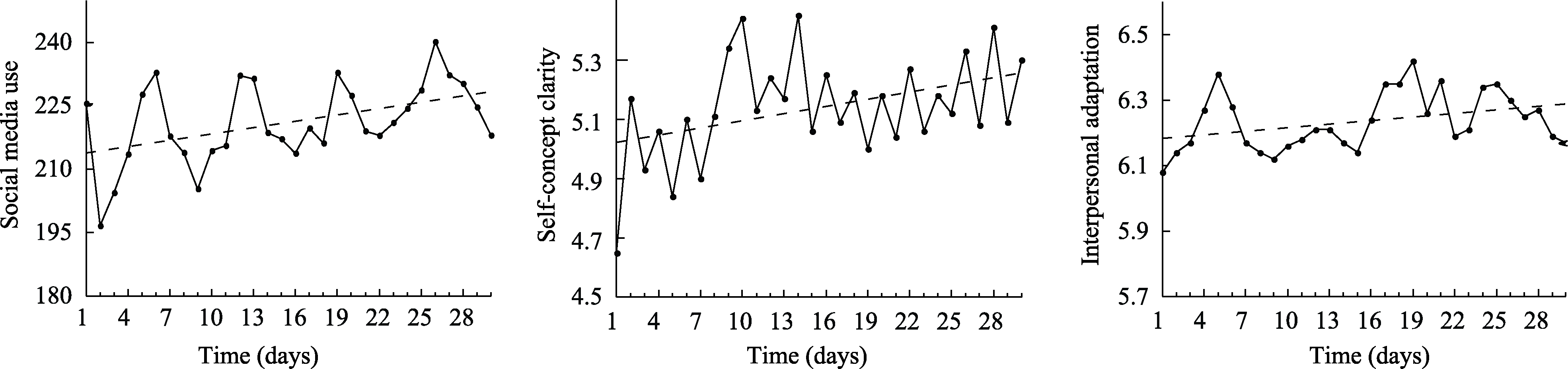
Figure 1. Daily trajectories of social media use, self-concept clarity, and interpersonal adaptation
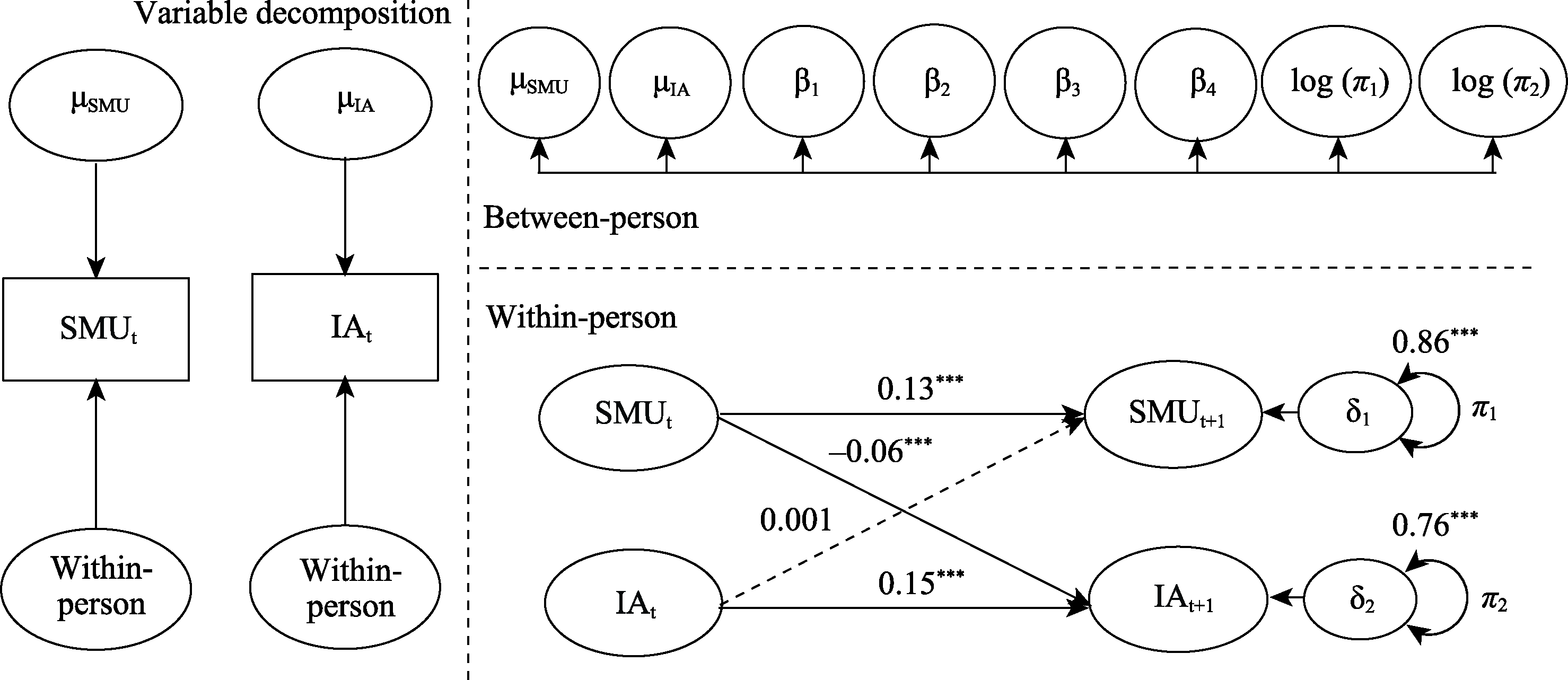
Figure 2. Intensive longitudinal cross-lagged model of social media use and interpersonal adaptation Note. SMU = social media use, IA = interpersonal adaptation; μ = mean; β = standardized autoregressive and cross-lagged path coefficient; δ = residual term; π = residual variance. To present the model hypotheses more clearly, paths involving control variables, between-person levels, and time trends are not shown. ***p < 0.001.
| Parameter | Estimate | SD | 95% BCI |
|---|---|---|---|
| Within-person autoregressive path coefficients | |||
| Social media use t?1 → Social media use t (β1) | 0.13*** | 0.01 | [0.11, 0.16] |
| Interpersonal adaptation t?1 → Interpersonal adaptation t (β2) | 0.15*** | 0.01 | [0.12, 0.17] |
| Within-person cross-lagged path coefficients | |||
| Social media use t?1 → Interpersonal adaptation t (β3) | ?0.06*** | 0.01 | [?0.08, ?0.04] |
| Interpersonal adaptation t?1 → Social media use t (β4) | 0.001 | 0.01 | [?0.019, 0.023] |
| Within-person residual variances | |||
| Social media use (π1) | 0.86*** | 0.02 | [0.85, 0.88] |
| Interpersonal adaptation (π2) | 0.76*** | 0.01 | [0.75, 0.77] |
Table 2 Parameter estimates for the cross-lagged model of social media use and interpersonal adaptation
| Parameter | Estimate | SD | 95% BCI |
|---|---|---|---|
| Within-person autoregressive path coefficients | |||
| Social media use t?1 → Social media use t (β1) | 0.13*** | 0.01 | [0.11, 0.16] |
| Interpersonal adaptation t?1 → Interpersonal adaptation t (β2) | 0.15*** | 0.01 | [0.12, 0.17] |
| Within-person cross-lagged path coefficients | |||
| Social media use t?1 → Interpersonal adaptation t (β3) | ?0.06*** | 0.01 | [?0.08, ?0.04] |
| Interpersonal adaptation t?1 → Social media use t (β4) | 0.001 | 0.01 | [?0.019, 0.023] |
| Within-person residual variances | |||
| Social media use (π1) | 0.86*** | 0.02 | [0.85, 0.88] |
| Interpersonal adaptation (π2) | 0.76*** | 0.01 | [0.75, 0.77] |
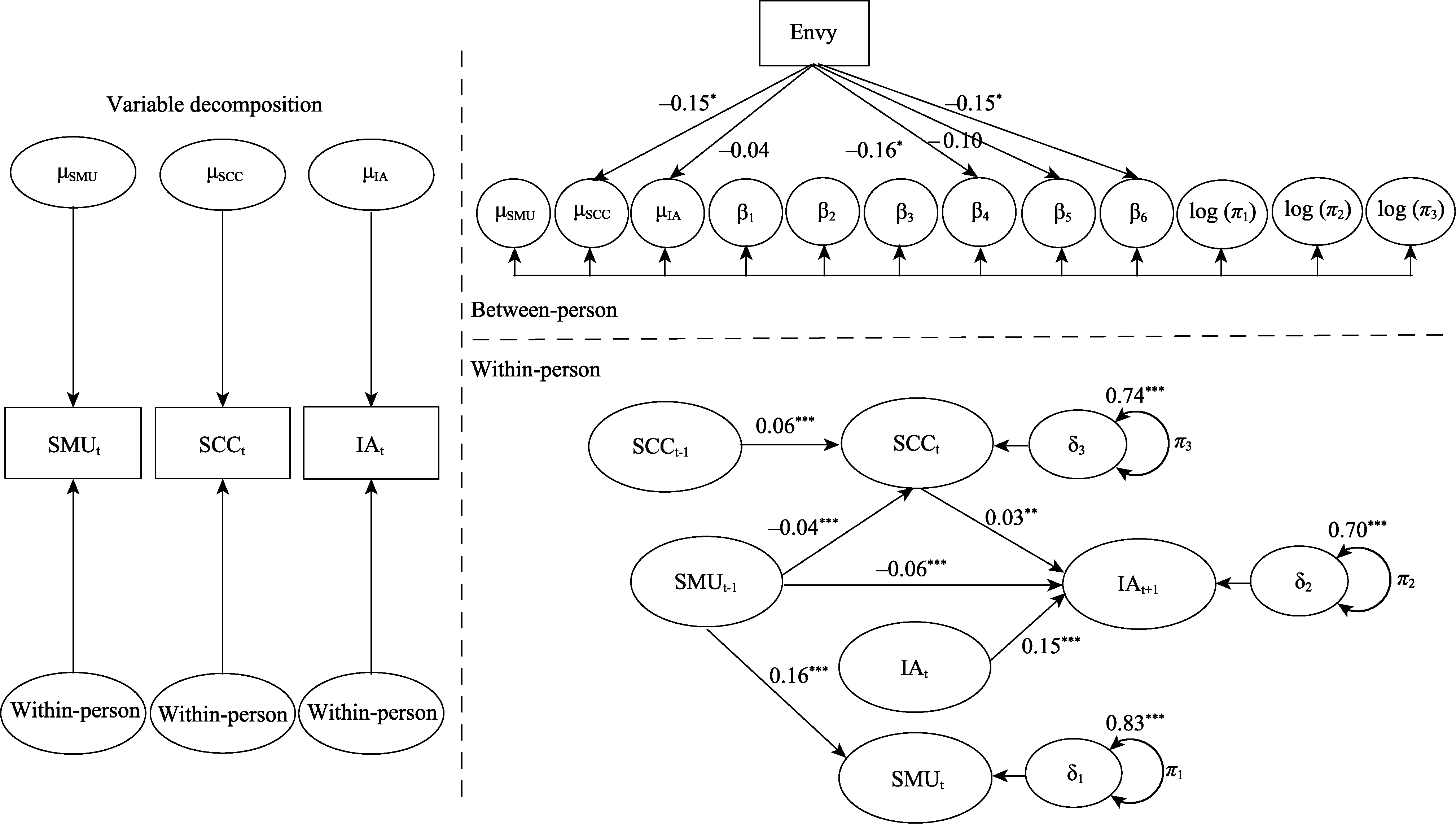
Figure 3. Second-order lagged 1-1-1 intensive longitudinal mediation model moderated by a Level 2 variable Note. SMU = social media use, IA = interpersonal adaptation, SCC = self-concept clarity; μ = mean; μ = mean; β = standardized path coefficient; δ = residual term; π = residual variance. Paths related to time trends are omitted, and only path coefficients related to the moderating variable are displayed at the between-person level. *p < 0.05, **p < 0.01, ***p < 0.001.
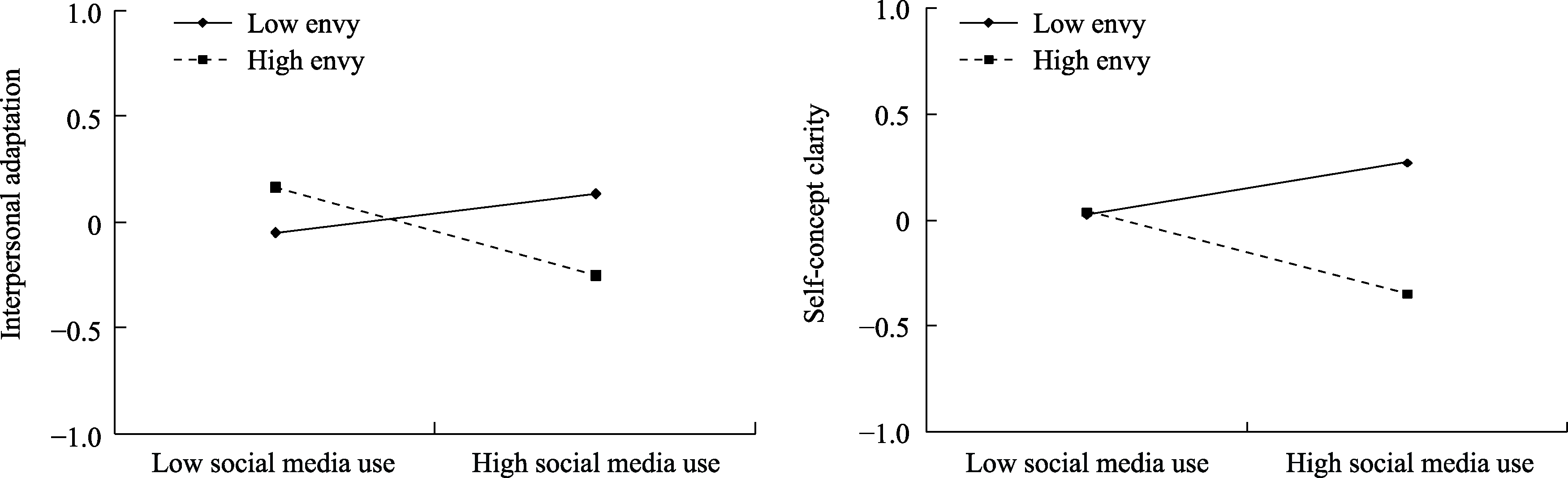
Figure 4. Interaction effects of envy and social media use on self-concept clarity and interpersonal adaptation
| Parameter | Estimate | SD | 95% BCI |
|---|---|---|---|
| Within-person autoregressive path coefficients | |||
| Social media use t?1 → Social media use t (β1) | 0.16*** | 0.01 | [0.13, 0.18] |
| Self-concept clarity t?1 → Self-concept clarity t (β2) | 0.06*** | 0.01 | [0.04, 0.09] |
| Interpersonal adaptation t → Interpersonal adaptation t+1 (β3) | 0.15*** | 0.01 | [0.12, 0.17] |
| Within-person mediation path coefficients | |||
| Social media use t?1 → Self-concept clarity t (β4) | ?0.04*** | 0.01 | [?0.06, ?0.01] |
| Self-concept clarity t → Interpersonal adaptation t+1 (β5) | 0.03** | 0.01 | [0.01, 0.04] |
| Social media use t?1 → Interpersonal adaptation t+1 (β6) | ?0.06*** | 0.01 | [?0.08, ?0.04] |
| Between-person moderation path coefficients | |||
| Envy → Interpersonal adaptation t+1 | ?0.04 | 0.07 | [?0.18, 0.08] |
| Envy → Self-concept clarity t | ?0.15* | 0.06 | [?0.28, ?0.03] |
| Envy × Social media use t?1 → Self-concept clarity t | ?0.16* | 0.07 | [?0.28, ?0.02] |
| Envy × Self-concept clarity t → Interpersonal adaptation t+1 | ?0.10 | 0.08 | [?0.25, 0.04] |
| Envy × Social media use t?1 → Interpersonal adaptation t+1 | ?0.15* | 0.06 | [?0.27, ?0.03] |
| Within-person residual variances | |||
| Social media use (π1) | 0.83*** | 0.02 | [0.80, 0.85] |
| Interpersonal adaptation (π2) | 0.70*** | 0.01 | [0.69, 0.72] |
| Self-concept clarity (π3) | 0.74*** | 0.01 | [0.72, 0.75] |
Table 3 Parameter estimates for the mediation effect of self-concept clarity and the moderation effect of envy
| Parameter | Estimate | SD | 95% BCI |
|---|---|---|---|
| Within-person autoregressive path coefficients | |||
| Social media use t?1 → Social media use t (β1) | 0.16*** | 0.01 | [0.13, 0.18] |
| Self-concept clarity t?1 → Self-concept clarity t (β2) | 0.06*** | 0.01 | [0.04, 0.09] |
| Interpersonal adaptation t → Interpersonal adaptation t+1 (β3) | 0.15*** | 0.01 | [0.12, 0.17] |
| Within-person mediation path coefficients | |||
| Social media use t?1 → Self-concept clarity t (β4) | ?0.04*** | 0.01 | [?0.06, ?0.01] |
| Self-concept clarity t → Interpersonal adaptation t+1 (β5) | 0.03** | 0.01 | [0.01, 0.04] |
| Social media use t?1 → Interpersonal adaptation t+1 (β6) | ?0.06*** | 0.01 | [?0.08, ?0.04] |
| Between-person moderation path coefficients | |||
| Envy → Interpersonal adaptation t+1 | ?0.04 | 0.07 | [?0.18, 0.08] |
| Envy → Self-concept clarity t | ?0.15* | 0.06 | [?0.28, ?0.03] |
| Envy × Social media use t?1 → Self-concept clarity t | ?0.16* | 0.07 | [?0.28, ?0.02] |
| Envy × Self-concept clarity t → Interpersonal adaptation t+1 | ?0.10 | 0.08 | [?0.25, 0.04] |
| Envy × Social media use t?1 → Interpersonal adaptation t+1 | ?0.15* | 0.06 | [?0.27, ?0.03] |
| Within-person residual variances | |||
| Social media use (π1) | 0.83*** | 0.02 | [0.80, 0.85] |
| Interpersonal adaptation (π2) | 0.70*** | 0.01 | [0.69, 0.72] |
| Self-concept clarity (π3) | 0.74*** | 0.01 | [0.72, 0.75] |
| [1] |
Arıcak O. T., Dündar Ş., & Saldaña M. (2015). Mediating effect of self-acceptance between values and offline/online identity expressions among college students. Computers in Human Behavior, 49, 362-374.
doi: 10.1016/j.chb.2015.03.025 URL |
| [2] |
Becht A. I., Nelemans S. A., Van Dijk M. P., Branje S. J., Van Lier P. A., Denissen J. J., & Meeus W. H. (2017). Clear self, better relationships: Adolescents’ self‐concept clarity and relationship quality with parents and peers across 5 years. Child Development, 88(6), 1823-1833.
doi: 10.1111/cdev.12921 URL |
| [3] | Beras K. (2018). Prime time: The first 6 weeks adjusting, belonging, and thriving in college. Journal of College Orientation, Transition, and Retention, 25(2), 4-11. |
| [4] | Burgoon J. K., Stern L. A., & Dillman L. (1995). Interpersonal adaptation: Dyadic interaction patterns. Cambridge University Press. |
| [5] |
Campbell J. D., Trapnell P. D., Heine S. J., Katz I. M., Lavallee L. F., & Lehman D. R. (1996). Self-concept clarity: Measurement, personality correlates, and cultural boundaries. Journal of Personality and Social Psychology, 70(1), 141-156.
doi: 10.1037/0022-3514.70.1.141 URL |
| [6] |
Chai X., & Lin D. (2021). School transition during adolescence: Turning crisis into opportunity. Advances in Psychological Science, 29(5), 864-874.
doi: 10.3724/SP.J.1042.2021.00864 |
| [7] | Cheng Q. (2023). Alone together: A perspective on the phenomenon of “lonely social” among youth in the social media era and the logic of its formation. Contemporary Youth Research, 5, 74-84. |
| [8] | Cinelli M., De Francisci Morales G., Galeazzi A., Quattrociocchi W., & Starnini M. (2021). The echo chamber effect on social media. Proceedings of the National Academy of Sciences, 118(9), e2023301118. |
| [9] | Cohen J. (2013). Statistical power analysis for the behavioral sciences. Routledge. |
| [10] |
Credé M., & Niehorster S. (2012). Adjustment to college as measured by the student adaptation to college questionnaire: A quantitative review of its structure and relationships with correlates and consequences. Educational Psychology Review, 24(1), 133-165.
doi: 10.1007/s10648-011-9184-5 URL |
| [11] | DataReportal. (2025). Digital 2024: China. Retrieved February 21 from |
| [12] |
Dong J., Lee S., Wang C. -h., & Shannon D. M. (2023). Impact on social capital and learning engagement due to social media usage among the international students in the U.S. Education and Information Technologies, 28(7), 8027-8050.
doi: 10.1007/s10639-022-11520-8 |
| [13] | Elder, G. H., Shanahan M. J., & Jennings J. A. (2015). Human development in time and place. In R. M.Lerner (Ed.), Handbook of child psychology and developmental science. Wiley. |
| [14] |
Falgoust G., Winterlind E., Moon P., Parker A., Zinzow H., & Madathil K. C. (2023). Applying the uses and gratifications theory to identify motivational factors behind young adult's participation in viral social media challenges on TikTok. Human Factors in Healthcare, 2, 100014.
doi: 10.1016/j.hfh.2022.100014 URL |
| [15] |
Fang J., Wen Z., Dong Y., & Wang X. (2025). Mediation analysis of intensive longitudinal data. Advances in Psychological Science, 33(4), 717-728.
doi: 10.3724/SP.J.1042.2025.0717 |
| [16] |
Fang J., Wen Z., Wang H., & Gu H. (2025). Moderated mediation analyses of intensive longitudinal data. Acta Psychologica Sinica, 57(5), 915-928.
doi: 10.3724/SP.J.1041.2025.0915 |
| [17] | Fang X., Wo J., & Lin X. (2005). Development of Chinese college student adjustment scale. Studies of Psychology and Behavior, 3(2), 95-101. |
| [18] |
Festinger L. (1954). A theory of social comparison processes. Human Relations, 7(2), 117-140.
doi: 10.1177/001872675400700202 URL |
| [19] |
Granovetter M. (1983). The strength of weak ties: A network theory revisited. Sociological Theory, 1, 201-233.
doi: 10.2307/202051 URL |
| [20] |
Gray R., Vitak J., Easton E. W., & Ellison N. B. (2013). Examining social adjustment to college in the age of social media: Factors influencing successful transitions and persistence. Computers & Education, 67, 193-207.
doi: 10.1016/j.compedu.2013.02.021 URL |
| [21] | Haktanir A., Watson J. C., Ermis-Demirtas H., Karaman M. A., Freeman P. D., Kumaran A., & Streeter A. (2021). Resilience, academic self-concept, and college adjustment among first-year students. Journal of College Student Retention: Research, Theory & Practice, 23( 1), 161-178. |
| [22] |
Hu Y., Tian H., Hou Y., Zhu M., & Gao X. (2025). Social networking sites use exacerbates appearance anxiety in young Chinese women: The moderating role of self-concept clarity. Psychology of Popular Media, 15(2), 227-239.
doi: 10.1037/ppm0000600 URL |
| [23] |
Jia G., Dai H., Chu Y., Wang X., Hao Y., & Wang S. (2022). Psychometric evaluation of the Chinese version of social anxiety scale for social media users and cross-sectional investigation into this disorder among college students. Comprehensive Psychiatry, 116, 152328.
doi: 10.1016/j.comppsych.2022.152328 URL |
| [24] | Jiang T. (2022). Mediating effects and moderating effects in causal inference. China Industrial Economics, (5), 100-120. |
| [25] |
Kahlow J. A., Coker M. C., & Richards R. (2020). The multimodal nature of Snapchat in close relationships: Toward a social presence-based theoretical framework. Computers in Human Behavior, 111, 106409.
doi: 10.1016/j.chb.2020.106409 URL |
| [26] |
Latif K., Weng Q., Pitafi A. H., Ali A., Siddiqui A. W., Malik M. Y., & Latif Z. (2021). Social comparison as a double-edged sword on social media: The role of envy type and online social identity. Telematics and Informatics, 56, 101470.
doi: 10.1016/j.tele.2020.101470 URL |
| [27] | Lazarus R. S., & Folkman S. (1984). Stress, appraisal, and coping. New York: Springer. |
| [28] |
Lennarz H. K., Lichtwarck-Aschoff A., Finkenauer C., & Granic I. (2017). Jealousy in adolescents' daily lives: How does it relate to interpersonal context and well-being? Journal of Adolescence, 54, 18-31.
doi: S0140-1971(16)30131-2 pmid: 27863267 |
| [29] |
Lewandowski G. W., Nardone N., & Raines A. J. (2010). The role of self-concept clarity in relationship quality. Self and Identity, 9(4), 416-433.
doi: 10.1080/15298860903332191 URL |
| [30] |
Li T., & Xu H. (2022). Self-concept clarity and social anxiety: Analysis of the multiple mediating effects. Studies of Psychology and Behavior, 20(5), 700-706.
doi: 10.12139/j.1672-0628.2022.05.018 |
| [31] | Lian S., Rao S., Wu Y., Zhang Y., & Zhang D. (2025). Short-form video social media dependence and sense of emptiness: The mediating effect of interpersonal disturbances and moderating role of self-construal. Chinese Journal of Clinical Psychology, 33(3), 572-577. |
| [32] |
Lin S., Falbo T., Qu W., Wang Y., & Feng X. (2021). Chinese only children and loneliness: Stereotypes and realities. American Journal of Orthopsychiatry, 91(4), 531-544.
doi: 10.1037/ort0000554 URL |
| [33] | Mattingly B. A., McIntyre K. P., & Lewandowski G. W. (2020). Interpersonal relationships and the self-concept. Springer. |
| [34] |
McNeish D., & MacKinnon D. P. (2025). Intensive longitudinal mediation in Mplus. Psychological Methods, 30(2), 393-415.
doi: 10.1037/met0000536 URL |
| [35] |
Mercan N., & Uysal B. (2023). The relationship of social media addiction with interpersonal problem-solving and personality traits in university students. Archives of Psychiatric Nursing, 43, 50-56.
doi: 10.1016/j.apnu.2022.12.025 pmid: 37032015 |
| [36] |
Ng J. C., Lin E. S., & Lee V. K. (2023). Does Instagram make you speak ill of others or improve yourself? A daily diary study on the moderating role of malicious and benign envy. Computers in Human Behavior, 148, 107873.
doi: 10.1016/j.chb.2023.107873 URL |
| [37] |
Niu X., Gou L. X., Han Y., Zhou X., & Wang J. L. (2025). Self‐concept clarity and envy as mediators between upward social comparison on social networking sites and subjective well‐being. British Journal of Developmental Psychology, 43(3), 611-628.
doi: 10.1111/bjdp.v43.3 URL |
| [38] |
O’Day, E. B., & Heimberg, R. G. (2021). Social media use, social anxiety, and loneliness: A systematic review. Computers in Human Behavior Reports, 3, 100070.
doi: 10.1016/j.chbr.2021.100070 URL |
| [39] |
Olson C., Toma C. L., & Brown B. B. (2025). The role of friendship maintenance over communication technologies in freshmen’s social adjustment to college. Journal of American College Health, 73(10), 4130-4139.
doi: 10.1080/07448481.2025.2475316 URL |
| [40] |
Osler L. (2024). (Self-) envy, digital technology, and me. Topoi, 43(3), 659-672.
doi: 10.1007/s11245-024-10047-6 |
| [41] | Petre C. E. (2021). The relationship between Internet use and self-concept clarity: A systematic review and meta-analysis. Cyberpsychology: Journal of Psychosocial Research on Cyberspace, 15(2), 1-4. |
| [42] |
Piccerillo L., & Digennaro S. (2025). Adolescent social media use and emotional intelligence: A systematic review. Adolescent Research Review, 10(2), 201-218.
doi: 10.1007/s40894-024-00245-z |
| [43] |
Pouwels J. L., Valkenburg P. M., Beyens I., van Driel I. I., & Keijsers L. (2021). Social media use and friendship closeness in adolescents’ daily lives: An experience sampling study. Developmental Psychology, 57(2), 309-323.
doi: 10.1037/dev0001148 pmid: 33539132 |
| [44] | Rafiq A., & Linden B. (2024). Social media and self-concept among postsecondary students: A scoping review. Cyberpsychology, Behavior, and Social Networking, 27( 3), 194-201. |
| [45] |
Rice R. E. (1993). Media appropriateness: Using social presence theory to compare traditional and new organizational media. Human Communication Research, 19(4), 451-484.
doi: 10.1111/hcre.1993.19.issue-4 URL |
| [46] | Rizki S., & Anti T. P. (2025). Social media and teens’ self-concept: A systematic literature review. SocioSphere: Interdisciplinary Journal of Social Sciences and Humanities, 1(1), 1-12. |
| [47] |
Schneider S., & Junghaenel D. U. (2023). Estimating reliabilities and correcting for sampling error in indices of within-person dynamics derived from intensive longitudinal data. Behavior Research Methods, 55(7), 3872-3891.
doi: 10.3758/s13428-022-01995-1 |
| [48] |
Seo M., Kim J., & Yang H. (2016). Frequent interaction and fast feedback predict perceived social support: Using crawled and self- reported data of Facebook users. Journal of Computer-Mediated Communication, 21(4), 282-297.
doi: 10.1111/jcc4.12160 URL |
| [49] |
She R., Han Mo P. K., Li J., Liu X., Jiang H., Chen Y., Ma L., & Fai Lau J. T. (2023). The double-edged sword effect of social networking use intensity on problematic social networking use among college students: The role of social skills and social anxiety. Computers in Human Behavior, 140, 107555.
doi: 10.1016/j.chb.2022.107555 URL |
| [50] | Slotter, E. B., & Emery L. F. (2017). Self-concept clarity and social role transitions. In J.Lodi-Smith & K. G.DeMarree (Eds.), Self-concept clarity: Perspectives on assessment, research, and applications (pp. 85-106). Springer. |
| [51] |
Smith R. H., Parrott W. G., Diener E. F., Hoyle R. H., & Kim S. H. (1999). Dispositional envy. Personality and Social Psychology Bulletin, 25(8), 1007-1020.
doi: 10.1177/01461672992511008 URL |
| [52] |
Sundararajan L. (2020). Strong-ties and weak-ties rationalities: Toward an expanded network theory. Review of General Psychology, 24(2), 134-143.
doi: 10.1177/1089268020916438 |
| [53] |
Tajmirriyahi M., & Ickes W. (2020). Self-concept clarity as a predictor of self-disclosure in romantic relationships. Journal of Social and Personal Relationships, 37(6), 1873-1891.
doi: 10.1177/0265407520911131 URL |
| [54] |
Tandon A., Dhir A., & Mäntymäki M. (2021). Jealousy due to social media? A systematic literature review and framework of social media-induced jealousy. Internet Research, 31(5), 1541-1582.
doi: 10.1108/INTR-02-2020-0103 URL |
| [55] | Tang J. H., & Wang C. C. (2012). Self-disclosure among bloggers: Re-examination of social penetration theory. Cyberpsychology, Behavior, and Social Networking, 15( 5), 245-250. |
| [56] | Teng G., Jin S., & Ma Y. (2015). The influence of new media on university freshmen’s school adaption and education countermeasures. Journal of Northeastern University (Social Science), 17(3), 288-294. |
| [57] |
Thiel C. E., Bonner J., Bush J. T., Welsh D. T., & Pati R. (2021). Rationalize or reappraise? How envy and cognitive reappraisal shape unethical contagion. Personnel Psychology, 74(2), 237-263.
doi: 10.1111/peps.v74.2 URL |
| [58] |
Thomas L., Briggs P., Hart A., & Kerrigan F. (2017). Understanding social media and identity work in young people transitioning to university. Computers in Human Behavior, 76, 541-553.
doi: 10.1016/j.chb.2017.08.021 URL |
| [59] |
Thomas L., Orme E., & Kerrigan F. (2020). Student loneliness: The role of social media through life transitions. Computers & Education, 146, 103754.
doi: 10.1016/j.compedu.2019.103754 URL |
| [60] |
Török I. A., Herold R., Bandi S., Varga J. É., Rózsa S., Somlai E. H., & Kállai J. (2025). Social networks and self-function-related interpersonal impairment in problematic Facebook and internet use. Computers in Human Behavior Reports, 18, 100697.
doi: 10.1016/j.chbr.2025.100697 URL |
| [61] | Uzuncakmak T., Taplak A. S., & Polat S. (2022). The relationship between purpose of social media use, social support, loneliness and depression: A sample of first year university students. International Journal of Caring Sciences, 15(2), 1322-1329. |
| [62] |
Valkenburg P. M., & Peter J. (2011). Online communication among adolescents: An integrated model of its attraction, opportunities, and risks. Journal of Adolescent Health, 48(2), 121-127.
doi: 10.1016/j.jadohealth.2010.08.020 URL |
| [63] | Wang B., Jin C., & Zhao B. (2020). Relationships among family function, interpersonal adaptation and cyberbullying of adolescents: A moderated mediation effect. Psychological Development and Education, 36(4), 469-476. |
| [64] |
Wohn D. Y., & LaRose R. (2014). Effects of loneliness and differential usage of Facebook on college adjustment of first-year students. Computers & Education, 76, 158-167.
doi: 10.1016/j.compedu.2014.03.018 URL |
| [65] |
Wolfers L. N., & Utz S. (2022). Social media use, stress, and coping. Current Opinion in Psychology, 45, 101305.
doi: 10.1016/j.copsyc.2022.101305 URL |
| [66] |
Wong T. K., & Hamza C. A. (2025). Online self-presentation, self-concept clarity, and depressive symptoms: A within-person examination. Journal of Youth and Adolescence, 54(4), 997-1013.
doi: 10.1007/s10964-024-02109-0 |
| [67] |
Wu C., Yun Y., Xiao Z., Zhou Z., Tong T., & Ren Z. (2024). The application of ecological momentary assessment in suicide research. Advances in Psychological Science, 32(12), 2067-2090.
doi: 10.3724/SP.J.1042.2024.02067 |
| [68] | Wu P., Feng R., & Zhang J. (2024). The relationship between loneliness and problematic social media usage in Chinese university students: A longitudinal study. BMC Psychology, 12(1), 13. |
| [69] |
Wu W., Huang L., & Yang F. (2024). Social anxiety and problematic social media use: A systematic review and meta-analysis. Addictive Behaviors, 153, 107995.
doi: 10.1016/j.addbeh.2024.107995 URL |
| [70] |
Xiang Y., He J., & Li Q. (2022). The causal mechanism between envy and subjective well-being: Based on a longitudinal study and a diary method. Acta Psychologica Sinica, 54(1), 40-53.
doi: 10.3724/SP.J.1041.2022.00040 |
| [71] |
Yang C., Holden S. M., & Carter M. D. (2017). Emerging adults' social media self-presentation and identity development at college transition: Mindfulness as a moderator. Journal of Applied Developmental Psychology, 52, 212-221.
doi: 10.1016/j.appdev.2017.08.006 URL |
| [72] |
Yang C, & Lee Y. (2020). Interactants and activities on Facebook, Instagram, and Twitter: Associations between social media use and social adjustment to college. Applied Developmental Science, 24(1), 62-78.
doi: 10.1080/10888691.2018.1440233 URL |
| [73] |
Yang Q., van den Bos K., Zhang X., Adams S., & Ybarra O. (2022). Identity lost and found: Self-concept clarity in social network site contexts. Self and Identity, 21(4), 406-429.
doi: 10.1080/15298868.2021.1940270 URL |
| [74] |
Ye Y., Zhang L., Zhao J., & Kong F. (2023). The relationship between gratitude and social well-being: Evidence from a longitudinal study and a daily diary investigation. Acta Psychologica Sinica, 55(7), 1087-1098.
doi: 10.3724/SP.J.1041.2023.01087 |
| [75] |
Yusainy C., Adila I., Kusumastuti A., Hikmiah Z., Faradisa K. R., & Valentinovich K. V. (2023). When I hate to follow you: Hate-following, envy, and schadenfreude on Instagram. Jurnal Psikologi, 50(3), 245-258.
doi: 10.22146/jpsi.84357 URL |
| [76] | Zhang X., Luo J., Peng T., & Duan B. (2020). The impact of online positive feedback on friendship quality in college freshmen: The chain mediating effect of self-concept clarity and hope. Chinese Journal of Special Education, 1(11), 83-89. |
| [77] |
Zhang Y., Li S., & Yu G. (2021). The relationship between social media use and fear of missing out: A meta-analysis. Acta Psychologica Sinica, 53(3), 273-290.
doi: 10.3724/SP.J.1041.2021.00273 |
| [78] | Zhou H., & Long L. R. (2004). Statistical remedies for common method biases. Advances in Psychological Science, 12(6), 942-950. |
| [79] |
Zhou W., Yan Z., Yang Z., & Hussain Z. (2023). Problematic social media use and mental health risks among first-year Chinese undergraduates: A three-wave longitudinal study. Frontiers in Psychiatry, 14, 1237924.
doi: 10.3389/fpsyt.2023.1237924 URL |
| [1] | XIANG Yanhui, HE Jiali, LI Qingyin. The causal mechanism between envy and subjective well-being: Based on a longitudinal study and a diary method [J]. Acta Psychologica Sinica, 2022, 54(1): 40-53. |
| [2] | LIAN Shuailei, SUN Xiaojun, NIU Gengfeng, ZHOU Zongkui. Upward social comparison on SNS and depression: A moderated mediation model and gender difference [J]. Acta Psychologica Sinica, 2017, 49(7): 941-952. |
| [3] | LIU Qingqi, NIU Gengfeng, Fan Cuiying, ZHOU Zongkui. Passive use of social network site and its relationships with self-esteem and self-concept clarity: A moderated mediation analysis [J]. Acta Psychologica Sinica, 2017, 49(1): 60-71. |
| [4] | DUAN Jinyun, GU Xiaohua, SUN Luying. The influence of explicit self-esteem, implicit self-esteem and the discrepancies between them on advice taking [J]. Acta Psychologica Sinica, 2016, 48(4): 371-384. |
| Viewed | ||||||
|
Full text |
|
|||||
|
Abstract |
|
|||||
